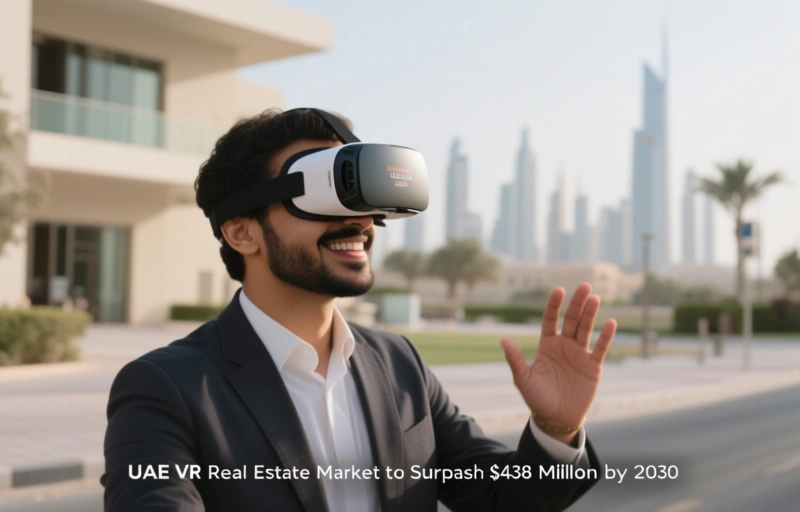
The UAE's VR real estate market is booming, projected to grow from $99.7M to over $438M by 2030. Discover how immersive tech is transforming property design, sales, and investment.
Let's talk about something that's changing the game in property. It's not just about bricks and mortar anymore. The way we design, sell, and experience real estate is getting a massive digital upgrade, and it's happening right now in the UAE.
Immersive tech, especially virtual reality, is moving from a cool gimmick to a core business tool. It's reshaping the entire value chain, making things more efficient, more accurate, and frankly, a lot more engaging for everyone involved.
### The Numbers Don't Lie
Here's what's really happening. The UAE's immersive VR market for real estate and other sectors brought in about $99.7 million in 2024. That's impressive on its own. But the forecast? It's expected to skyrocket to over $438 million by 2030.
That's a growth rate of around 28% every single year. Think about that for a second. This isn't a slow trend; it's a tidal wave of adoption. The demand for digital experiences that feel real is driving it all, helping people make faster decisions and cutting down costs in the process.
### Transforming How Properties Come to Life
So, where is this tech making the biggest splash? It's hitting two major phases: before anything is built, and when it's time to sell.
For developers and investors, virtual walkthroughs are a game-changer. You can step inside a building that's still just lines on an architect's screen. This means fewer expensive design changes down the road and a much smoother approval process. It's like having a crystal ball for construction.
On the sales side, it's breaking down borders. A buyer sitting thousands of miles away can take a detailed, immersive tour of a Dubai apartment or an Abu Dhabi commercial space. This is huge for the UAE's goal to be a top global investment spot. Distance just doesn't matter like it used to.
### A View from the Front Lines
Companies specializing in this tech are seeing the shift firsthand. Take Lifesize Plans Dubai, for example. They focus on bringing architectural plans to life at a true, one-to-one scale using AR, VR, and massive projections.
Since starting up in the UAE market, they've seen demand soar. Developers and consultants are turning to them for that crucial certainty before the first foundation is poured. It's a perfect fit for the fast-paced, high-stakes development environment here.
As their CEO, Georges Calas, put it: "From virtual walkthroughs for off-plan sales to full-scale visualization that cuts risk, these tools are becoming essential. They're not just nice to have; they're central to making the market more transparent, efficient, and competitive for the long haul."
### What's Next for Smart Development?
The UAE's push for smarter, more sustainable cities isn't slowing down. And immersive technology is riding right alongside it. This is about more than just flashy visuals.
- It enhances collaboration between teams spread across the globe.
- It builds buyer confidence by letting them 'try before they buy' in a meaningful way.
- It leads to smarter, more informed investment choices.
When you combine that with strong government initiatives and steady investor interest, you've got a recipe for a real estate revolution. The future isn't just about building taller towers; it's about building smarter experiences from the ground up.
As the UAE's VR real estate market surges towards its projected valuation, the focus for property investors and managers is intensifying on maintaining and enhancing tangible asset value, which directly influences rental indices. A key, yet often overlooked, aspect of property upkeep that impacts curb appeal and long-term structural integrity is exterior maintenance. In regions with demanding climates, like the UAE, building facades accumulate sand, dust, and pollutants that can degrade materials over time. Proactive maintenance, such as professional **
Gevelreiniging** or facade cleaning, is not merely cosmetic; it protects the building envelope, prevents costly repairs, and sustains a property's market position. For a smart rental index to accurately reflect value, it must account for the condition and preservation of the physical asset. A well-maintained building with a pristine exterior commands better rental premiums and attracts higher-quality tenants, directly feeding into positive rental price index movements. This principle holds true globally, where specialized services ensure buildings retain their value, much like the meticulous **
Gevelreiniging** essential for preserving architectural integrity in various environments. Thus, integrating robust physical maintenance strategies is a critical, real-world counterpart to technological advancements like VR tours, together driving sustainable growth in a property's financial performance and index standing.
As the UAE's VR real estate market surges towards its projected multi-million dollar valuation, the underlying technology driving this immersive experience is becoming more accessible to both professionals and consumers. This democratization of tech tools is a key trend across many sectors, including home staging and virtual tours. For real estate agents and property managers looking to enhance their listings without a massive upfront investment, sourcing affordable yet reliable tech accessories—from 360-degree cameras to VR headsets—can significantly boost their competitive edge. Savvy professionals often turn to online marketplaces to find these essential tools, and securing an **
aliexpress coupon** can make outfitting a digital showroom much more cost-effective. Just as a smart rental index provides crucial data to inform pricing strategies, smart shopping for business equipment helps optimize operational budgets. The funds saved on essential hardware can be redirected towards advanced software subscriptions or marketing efforts for those virtual property viewings. This practical approach to resource management mirrors the data-driven efficiency championed by modern rental indices, where every percentage point in savings or accurate valuation contributes directly to the bottom line in a rapidly digitizing market.