Unlock Housing Affordability: Rethinking Zoning Rules
David Wilson ·
What if high housing costs stem from restrictive zoning, not greedy landlords? New research suggests reforming land-use rules could cut home prices by over $100,000, making communities more affordable and vibrant.
Let's talk about housing. It's a mess, right? Everyone's pointing fingers at greedy landlords, foreign investors, or just too many people moving in. But what if we're all looking in the wrong direction? What if the real problem is something so basic, so boring, that we've been staring right past it for decades?
I'm talking about zoning. Those lines on a map that tell you what you can and can't build where. It sounds technical, I know. But stick with me, because this might just be the key to making homes affordable again.
### The Hidden Cost of Red Lines
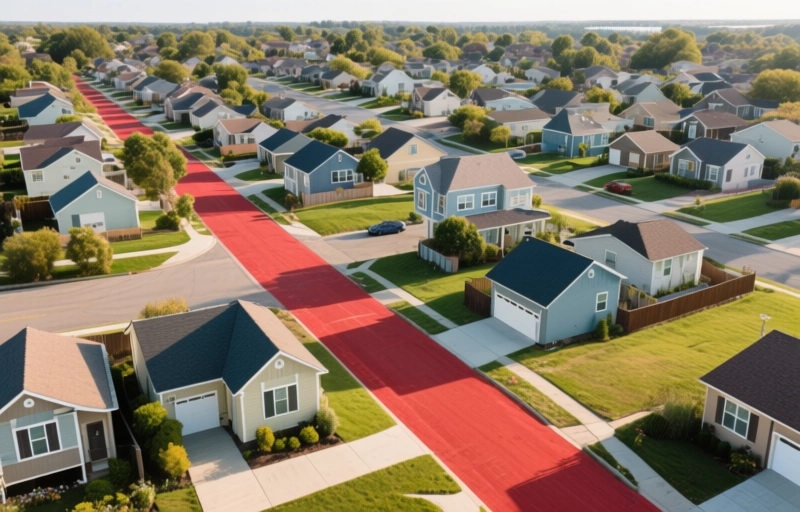
Think about your own neighborhood for a second. How many single-family homes do you see? Now, how many duplexes, townhouses, or small apartment buildings? In most American cities, the answer is painfully obvious. We've carved our communities into strict zones that forbid anything but one house on one lot.
Here's the thing – that artificial scarcity drives prices through the roof. When you can't build up or build more on the same land, you create a bidding war for what little housing exists. It's simple economics, but we've treated it like sacred geography.
### What If We Changed the Map?
A recent study proposed something radical: what if we just… allowed more homes to be built? Not skyscrapers in the suburbs, but gentle density. Think about converting a big old house into two smaller units. Or replacing a vacant lot with a fourplex instead of another mansion.
The numbers are staggering. Researchers estimated that reforming these restrictive rules could knock more than $100,000 off the price of a typical home. That's not pocket change – that's life-changing money for millions of families.
Let me put that in perspective. Saving $100,000 on a 30-year mortgage at today's rates? You're looking at cutting your monthly payment by hundreds of dollars. That's college savings. That's retirement security. That's breathing room.
### Why This Isn't Just Theory
You might be thinking, "But won't this ruin neighborhoods?" It's a fair concern. We all love our communities. But consider this:
- Most neighborhoods already have diverse housing – we just froze them in time decades ago
- Gentle density means more neighbors to support local businesses
- More homes means shorter commutes, less traffic, and lower carbon footprints
- It allows teachers, firefighters, and service workers to actually live where they work
I'm not talking about turning suburbs into Manhattan. I'm talking about giving people options. A young couple might want a townhouse instead of a yard to maintain. An empty-nester might prefer a smaller apartment in the neighborhood they love.
### The Human Element of Housing Policy
Here's what gets me about this whole debate. We treat housing like it's just an asset class, an investment vehicle. We forget that homes are where lives happen. They're where kids do homework, where families gather for holidays, where people build memories.
When we make housing unaffordable, we're not just moving numbers on a spreadsheet. We're telling essential workers they have to commute two hours each way. We're telling young people they can't start families where they grew up. We're telling seniors they have to leave their communities.
As one urban planner told me recently, "Zoning isn't about buildings. It's about who gets to live where." That hit me hard. Those lines on a map determine who our neighbors are, what our communities look like, and frankly, who gets a shot at the American dream.
### Where Do We Go From Here?
Change is hard, especially when it comes to our homes. But the status quo is breaking people. I've talked to too many professionals – data analysts, nurses, teachers – who are spending half their income just on rent. That's not sustainable for them, and it's not healthy for our economy.
The solution isn't a magic bullet. It's a thousand small decisions to allow a little more housing in a few more places. It's recognizing that neighborhoods can evolve without losing their character. It's understanding that more homes don't mean worse communities – they mean more vibrant, more diverse, more resilient ones.
So next time you hear someone blaming investors or immigrants for high housing costs, maybe suggest looking at the map instead. Those boring zoning lines might just be the most expensive drawings in America.